
The People Who Build Western Colorado Can't Afford to Live in It
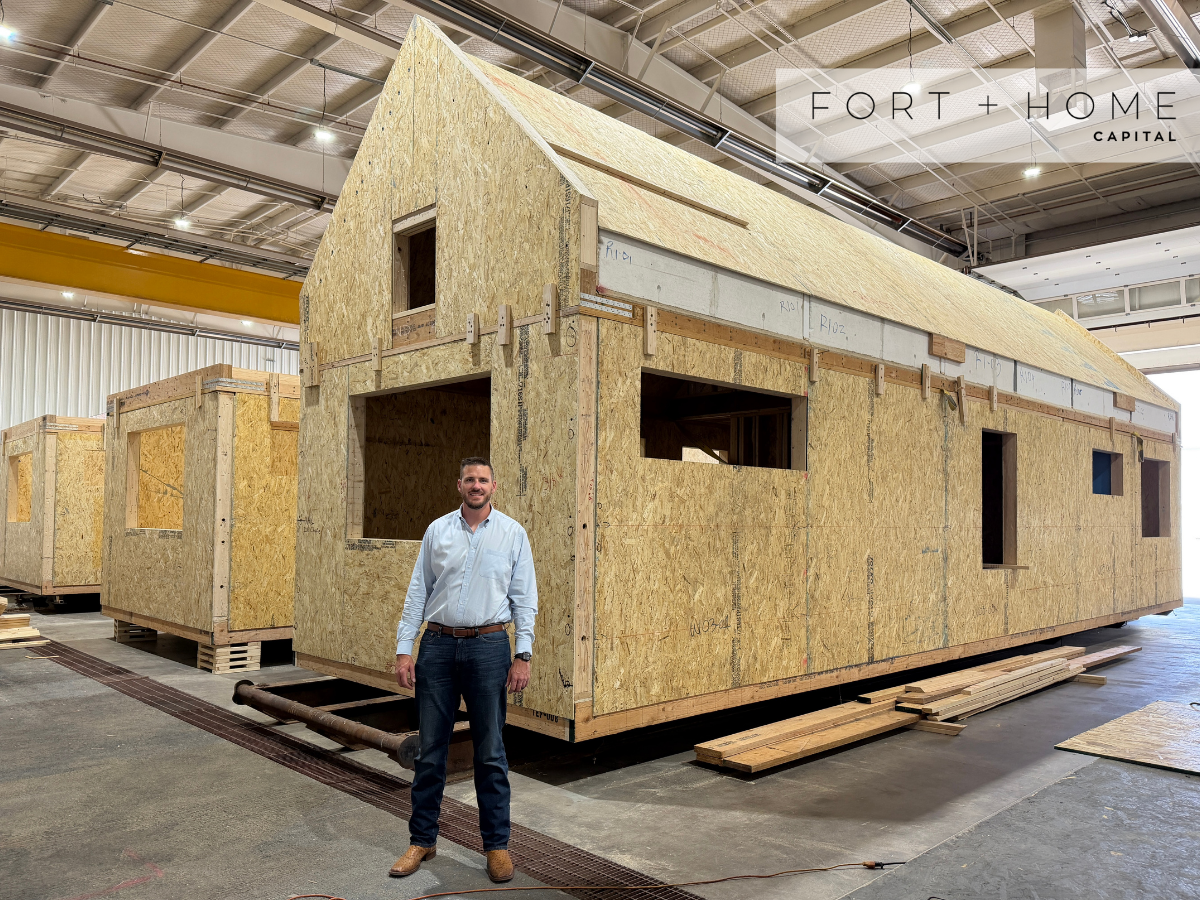
I write a lot of this standing on our factory floor. Right now there are four homes moving down the line in front of me — walls up, roofs on, window openings cut. In a few weeks they'll sit on lots in towns across Western Colorado. And in most of those towns, the people who keep the place running can't afford to buy the very homes we're building.
That's not a slogan. It's the math. And it's the part the national housing headlines keep missing.
The headline numbers look fine. The local ones don't.
Nationally, the data this month reads like a recovery. Freddie Mac put the 30-year fixed mortgage at 6.47% in mid-June — down from 6.52% the week before, and well under the 6.81% of a year ago. Rates are drifting the right way. Out here on the Western Slope, drift isn't the story.
The median home in Mesa County is running around $410,000 — up roughly 87% over eight years. The paychecks of the people who do the work haven't moved anything like that. The local affordability index sat at 84 this spring, which is a clinical way of saying the median household doesn't earn enough to qualify for the median house. Grand Junction alone is estimated to be short somewhere between 900 and 2,400 homes.
And here's the part that matters most: almost none of that shortage is in the segment where it's needed. We are not short on $700,000 houses. We're short on the entry-level home — call it the $250,000 to $400,000 range — that a nurse, a teacher, or a welder can actually buy near where they work.
-1.png?width=1200&length=1200&name=Builders%20View%20-%20Blog%20Featured%20Graphics%20(1)-1.png)
You can see the gap in who's leaving
Numbers are abstract. The consequences aren't. Teachers across the region are commuting an hour each way because that's where the affordable house is. Districts are exploring housing stipends just to keep classrooms staffed. Open nursing positions stay open longer — not only because of the well-documented nursing shortage, but because even when someone says yes, there's nowhere for them to live. Colorado recently stood up a $50 million loan program so rural educators can get a mortgage with no down payment. When a state has to step in like that, it's a signal the underlying math has stopped working on its own.
Housing economists have a name for the band getting squeezed: the "missing middle" — households earning roughly 80% to 160% of area median income. That's not a fringe group. That's the exact band that builds, staffs, teaches, and treats these communities. And it's the band getting priced out of them.
Why cheaper money won't close this gap
It's tempting to assume the affordability problem is a rate problem — that if mortgages get cheap enough, the gap closes. It won't, and the reason is structural. A few basis points off a mortgage rate changes a monthly payment at the margin. It does not change the cost of producing a home. And in mountain markets, the cost of production is the binding constraint. Land is scarce and expensive. The building season is short. Skilled labor is thin and has to be paid accordingly. Weather adds delay, and delay adds carrying cost. By the time a site-built home in this region is finished, its cost basis is simply too high to land in the price band the workforce needs — regardless of where rates sit.
A structural shortage doesn't close with cheaper money. It closes with a cheaper way to build.
What actually moves the cost basis
That's the whole reason we own a factory instead of just a development company. Building indoors, year-round, on a controlled line changes the parts of the cost curve that break a site builder at this price point. Labor is more productive in a fixed location than scattered across job sites. Weather stops being a line item. Schedules compress, which cuts carrying cost. Materials get bought and used with less waste. None of that is magic — it's manufacturing logic applied to a product that, in most of the country, is still assembled outdoors one stick at a time.
The output is a finished home delivered at a cost the median worker can actually carry — at today's rates, not a hoped-for future rate.
The shortage isn't going away
The uncomfortable truth underneath all of this is that the demand is durable. This isn't a cyclical dip that a rate cut resolves. The Western Slope's affordability gap has been widening for the better part of a decade, driven by in-migration, constrained supply, and a cost-to-build curve that keeps moving the wrong way for entry-level product. You can't build your way out of a gap this size in a single cycle.
For the towns themselves, that's a problem. For anyone thinking about where housing goes from here, it's the central fact: the need for attainable, workforce-priced housing in markets like ours is structural, and the only credible path to delivering it at scale is to change how it gets built.
We publish a short read on this market every week. If you track housing and want the next one, subscribe to the Weekly Capital Brief. If a colleague should be reading it, forward this along.
Let's build your dream home.
From the factory floor to the foundation. Homes designed for living well — built for the people who keep our communities running.
Important Disclaimer
This article and the linked video are for educational purposes only and are not:
- An offer to sell any securities.
- A solicitation of an offer to buy any securities.
- Investment, tax, or legal advice.
Any actual investment opportunity would be offered only through formal documents and only to eligible investors under applicable securities laws. You should consult your own advisors before making any investment decisions.
About the Author
Jeff Zimmerman is the CEO of Fort + Home, a vertically integrated real estate and construction company based in Grand Junction, Colorado. Fort Homes, the company's construction division, operates a precision-built production facility serving developers and communities across the Western Slope and Rocky Mountain region. Builder's View is Jeff's weekly platform for honest thinking about housing, construction, and business.